


Legal notice: This article is for informational purposes only and does not constitute professional advice. Always follow the manufacturer's instructions for your plumbing fixtures and cleaning products. If you are unsure or have complex problems, please contact a qualified professional. We accept no liability for damage that may result from using the methods described here. Use cleaning products only in accordance with the safety instructions on the product label.
Toilet cistern maintenance – why it can be important
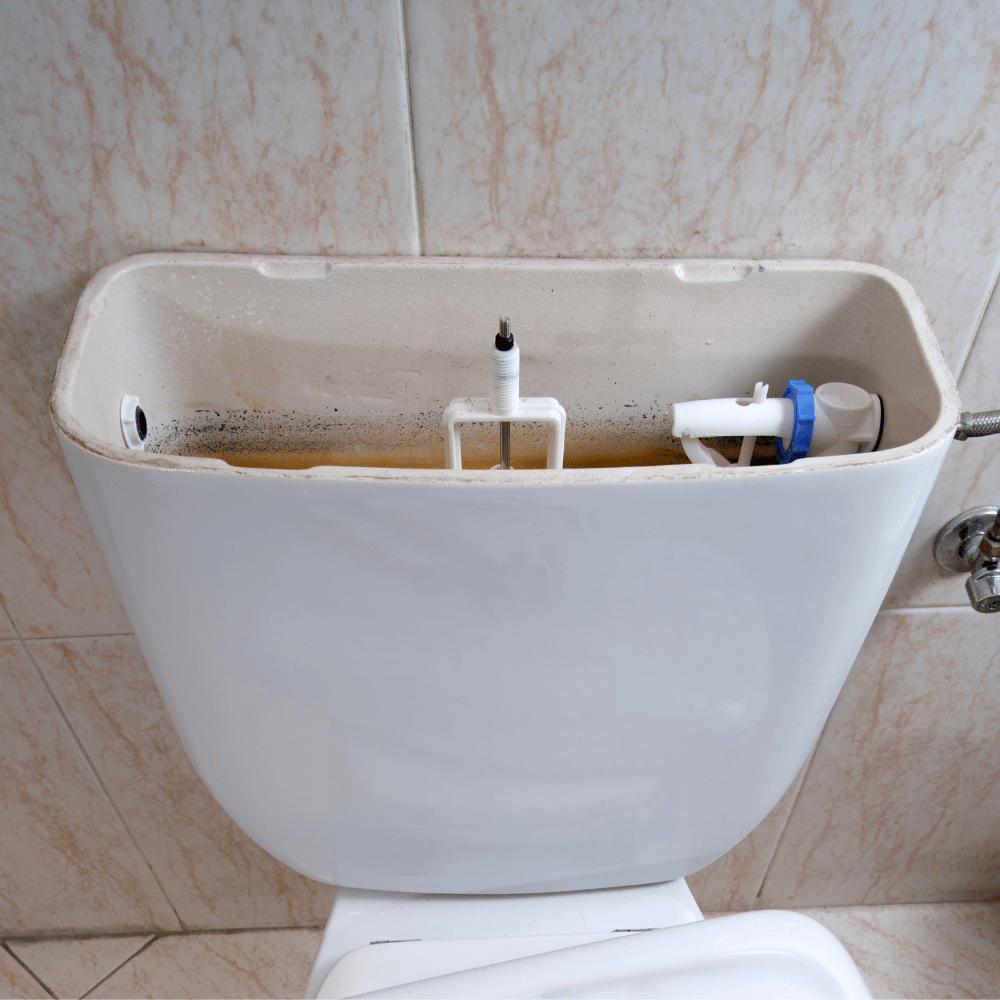
The toilet cistern is often overlooked during bathroom cleaning. Over time, limescale, dirt, and organic residue can accumulate here, which in some cases can impair its function or lead to unpleasant odors.
Possible effects of pollution
Neglected toilet cisterns can develop various problems:
- Limescale deposits: Can impair valves, floats and mechanisms.
- Organic deposits: Can form on damp surfaces
- Malfunctions: Possibly impaired flushing mechanism or increased water consumption
- Odor formation: Can occur in stagnant water.
Note: The frequency and intensity of these problems depend on various factors, especially the water hardness in your region.
Recommended cleaning intervals
The cleaning frequency can depend on the water hardness. General guidelines:
- Soft water (below 8°dH): Approximately 1-2 times a year
- Medium water hardness (8–14°dH): Approximately 2–3 times a year
- Hard water (over 14°dH): Possibly 3–4 times a year
Important: These are guidelines only. The actual frequency required may vary from person to person.
Signs of potential cleaning needs
The following signs may indicate a need for cleaning:
- The toilet cistern continues to run or drips.
- Reduced rinsing performance
- Discoloration in the toilet bowl after flushing
- Unpleasant odors
- Unusual noises during refilling
- Visible deposits
If malfunctions persist, please consult a specialist company.
Cleaning the toilet cistern – General procedure
Safety note: Turn off the water supply before starting work. Wear protective gloves. Consult the safety data sheets for all products used.
Preparation
- Close the water supply at the angle valve.
- Empty the toilet tank (press the flush button)
- Carefully remove the lid (follow the manufacturer's instructions).
- Put on protective gloves
cleaning
Step 1: Initial cleaning
Remove loose debris with a sponge. Scoop out any remaining water.
Step 2: Descaling
Several options are available for descaling:
Option A: Special toilet cistern cleaners
Products like our 500ml lemon-scented toilet cistern cleaner are specifically designed for this application. Use the product according to the instructions on the label. Observe the dosage, contact time, and safety information.
Option B: Household descalers
Alternatively, universal descalers can be used. Our 1L universal descaler can be used for various household applications. Please refer to the product instructions.
Option C: Home remedies
Vinegar or citric acid are often recommended. Keep in mind:
- Vinegar can damage seals with frequent use.
- Longer exposure times are required
- Thorough rinsing is necessary.
Note: Special cleaners are usually tested for material compatibility.
Step 3: Clean the mechanism
Clean the float, valves, and overflow pipe. Check seals for wear.
Step 4: Rinse
Rinse the cistern thoroughly with clean water. Turn the water supply back on and allow the cistern to fill. Flush several times to remove any cleaning residue.
Different types of toilet cisterns
Surface-mounted cistern: Usually easily accessible, cleaning mostly uncomplicated.
Concealed cistern: Access via inspection hatch, which can be more difficult. If unsure, consult a specialist.
Common problems and possible causes
Problem: Toilet cistern runs after use
Possible causes: Defective seal, dirty float
Action taken: Cleaning, possibly replacement of seals. If the problem persists: Contact a specialist company.
Problem: Weak rinsing performance
Possible causes: Limescale deposits in valves
Action: Thorough descaling
Problem: Discolored water
Possible causes: Deposits in the toilet cistern
Measure: Thorough cleaning
Problem: Odor formation
Possible causes: Organic deposits
Action: Cleaning with suitable products
If problems persist, please contact a specialist company.
Continuous care
Regular maintenance between deep cleanings can be beneficial. Our 500ml toilet cistern cleaner can be used for this purpose:
- Dosage according to product instructions
- Pour directly into the toilet cistern
- Let absorb
- Rinse normally
Benefits of regular care can include:
- Can prevent limescale deposits
- Can help neutralize odors
- Can support functionality
What should be avoided?
- Do not turn off the water supply: This can lead to water damage.
- Unsuitable cleaners: Toilet cleaners or aggressive chemicals can damage materials.
- Do not check the mechanics: Take the opportunity for inspection.
- Insufficient rinsing: Can leave residues
Water hardness and cleaning requirements
Water hardness affects limescale formation. You can find out your water hardness from your water supplier.
| Water hardness | °dH | Potential cleaning needs |
|---|---|---|
| Soft | 0–7°dH | Lower |
| Medium | 7–14°dH | Medium |
| Hard | 14–21°dH | Increased |
| Very hard | above 21°dH | More often |
When professional help might be advisable
In the following cases you should consult a specialist company:
- Persistent malfunctions despite cleaning
- Heavily calcified or defective mechanics
- Difficult-to-access concealed cisterns
- Water damage or leaks
- Uncertainty in implementation
Summary
Regular maintenance of the toilet cistern can help maintain its functionality and prevent problems. With suitable cleaning agents and the correct procedure, this maintenance can often be carried out by the homeowner.
For maintenance, we recommend our 500ml cistern cleaner with lemon scent , which was specially developed for this application.
Final safety note: Use all cleaning products only according to the manufacturer's instructions. Observe the safety data sheets, hazard statements, and safety advice on the product labels. Keep cleaning agents out of the reach of children and pets. In case of skin contact, rinse thoroughly with water. In case of eye contact, rinse immediately with plenty of water and seek medical advice. Ensure adequate ventilation during use.


