


Note: This article is for informational purposes only. Always follow the carpet manufacturer's care instructions. For valuable or antique carpets, we recommend consulting a specialist. We accept no liability for damages.
Carpets in the home – care and cleaning
Carpets are exposed to various stresses in everyday life: dust, dirt from shoes, spilled liquids, and pet hair. With suitable cleaning methods, many types of soiling can be treated, and the lifespan of carpets can be extended.
Types of carpets and their special features
Different types of carpets require different care:
- Synthetic carpets (polyester, polypropylene): Generally easy to care for and moisture-resistant.
- Wool carpets: More delicate, require gentle cleaning
- High-pile carpets: Deep fibers require special cleaning methods.
- Oriental rugs: Often hand-knotted, they should be cleaned by specialist companies.
Important: Check the care label or manufacturer's instructions before each cleaning.
Regular basic care
Vacuuming:
- At least 1-2 times a week, more frequently in busy areas
- Use appropriate nozzles for your carpet type.
- For high-pile carpets: possibly reduce absorbency.
- Vacuum in both directions for a more thorough cleaning.
Knock out and air out:
- Smaller rugs can be beaten regularly.
- Fresh air can help reduce odors.
- Direct sunlight can cause colors to fade.
Stain treatment for carpets
Immediate action for fresh stains:
- Immediately dab up any liquids with an absorbent cloth (do not rub).
- Carefully lift off any solid dirt.
- Work from the outside in to prevent spread.
- Do not use too much moisture
Tip: Always test cleaning agents on an inconspicuous area.
Carpet cleaning with cleaning agents
Step 1: Preparation
Vacuum the carpet thoroughly to remove loose dirt.
Step 2: Apply cleaner
Special carpet cleaners can be applied according to the manufacturer's instructions. Our 500ml upholstery and carpet cleaner is designed for textile floor coverings. Please refer to the application instructions on the label.
Step 3: Training
Work the cleaner in with a soft brush or cloth. Avoid excessive moisture.
Step 4: Let it dry
Allow the rug to dry completely. Good ventilation will speed up the drying process. Do not walk on the rug until it is completely dry.
Special types of stains
Different stains may require different treatment:
- Red wine: Dab immediately, treat with cold water, then use carpet cleaner.
- Coffee/tea: Dab with cold water, apply carpet cleaner
- Grease: Sprinkle with cornstarch, let it soak in, vacuum up, then use cleaner.
- Chewing gum: Harden with ice cubes, remove carefully.
Note: For stubborn or large stains, professional help may be advisable.
What should be avoided?
- Too much water: Can lead to mold growth in the carpet or subfloor
- Aggressive cleaners: Can fade colors or damage fibers
- Vigorous rubbing: Can damage fibers and push stains deeper.
- Hot water: Can be problematic with some materials
Deep cleaning of carpets
Several methods are available for more thorough cleaning:
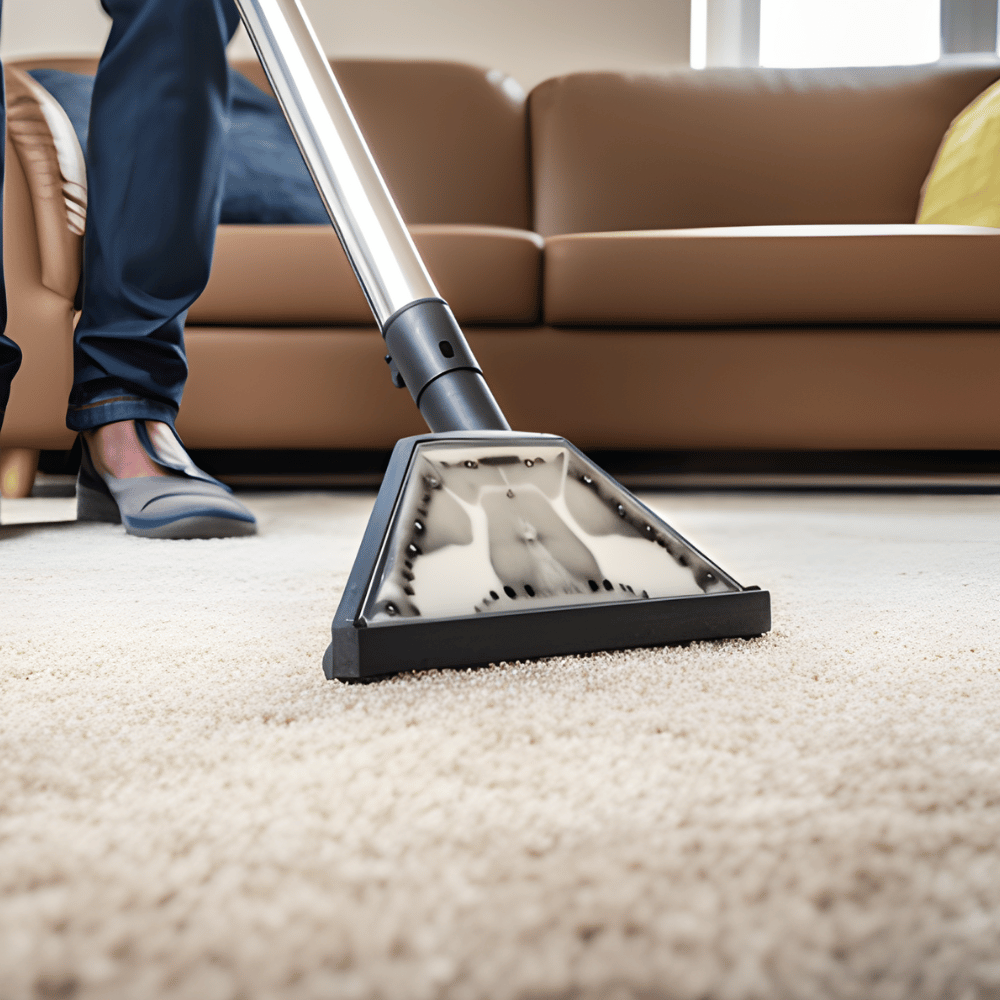
- Carpet cleaning equipment: Can be rented or purchased.
- Steam cleaner: For suitable carpet types
- Professional cleaning: Recommended for valuable carpets or 1-2 times a year.
Removing odors from carpets
In case of unpleasant odors:
- Ventilate thoroughly
- Sprinkle on baking powder or baking soda, let it soak in, then vacuum it up.
- Use special odor neutralizers
- For stubborn odors: Consider professional cleaning.
Preventive measures
- Remove your shoes before stepping onto the carpet.
- Place doormats at entrances
- Regular vacuuming
- Immediate stain treatment
- Carpet protection sprays can have a dirt-repellent effect.
When professional cleaning makes sense
In the following cases, professional help may be advisable:
- Large-scale or stubborn soiling
- Valuable or antique carpets
- Oriental rugs or hand-knotted rugs
- Strong odor formation
- Regular deep cleaning (1-2 times a year)
Summary
Caring for carpets requires regular attention and suitable cleaning products. With the right approach and preventative measures, carpets can remain beautiful for a long time.
Safety instructions: Use cleaning products only according to the manufacturer's instructions. Observe safety data sheets and warning labels. Ensure adequate ventilation during and after cleaning. Keep cleaning agents out of the reach of children.


